

Introduction
The Maryland State Department of Education’s Division of Early Intervention and Special Education Services (DEI/SES) engaged Triskelle Software Solutions to custom-build a cloud-hosted software application designed to support the Division’s Accountability to Improve Performance (AIP) process for Local Infants and Toddlers Programs (LITPs), local education agencies (LEAs), and public agencies (PAs). A focus group of Maryland’s top subject matter experts worked with Triskelle Software Solutions to design a solution specific to the particular needs of Maryland’s DEI/SES practices to ensure federal compliance with Individuals with Disabilities Education Act (IDEA). This project grew from the initial request to involve several contract extensions to build expanded functionality.
Triskelle led and facilitated discussions with subject matter experts and the client to develop the features listed below. We used solid project management methodology combined with agile best practices to successfully meet the customer’s and stakeholders’ needs. This approach allowed us to deliver a user-friendly, state-of-the-art application that provided a positive experience for the end users and reflected well on the Maryland Department of Education.
Company’s Role: During the four years we worked on this project, we provided the following specific roles (role names provided are from the Maryland Labor Categories list, and do not directly align with the role titles within Triskelle):
- Accessibility Developer, Back-End Engineer, Business Analyst (Senior & Mid), Data Analytics Engineer, Data Analytics Lead, Database Administrator, Database Manager, Delivery Manager, DevOps Engineer (Senior & Junior), Documentation Specialist, Engineering Manager, Front-End Engineer, Full Stack Developer, Information Architecture Specialist, Information Architecture Strategist, Information Security Engineer, IT Subject Matter Expert, Product Designer, Product Lead, Product Manager (Senior), Project Manager (Senior), Scrum Master (Junior), Site Reliability Engineer, Software Engineer, Systems Architect, Systems Engineer, User Experience Lead, UX & Service Designer, User Experience Researcher, UX Writer/Editor
In addition to the roles from the Maryland Labor Categories list, we also provided the following roles:
- Quality Assurance Lead, Quality Assurance Tester, User Acceptance Testing Coordinator
We were a subcontractor to the prime vendor on this project (AnLar), but were the main provider of all services (knowledge gathering, project management, development, testing, etc).
Functionality Includes
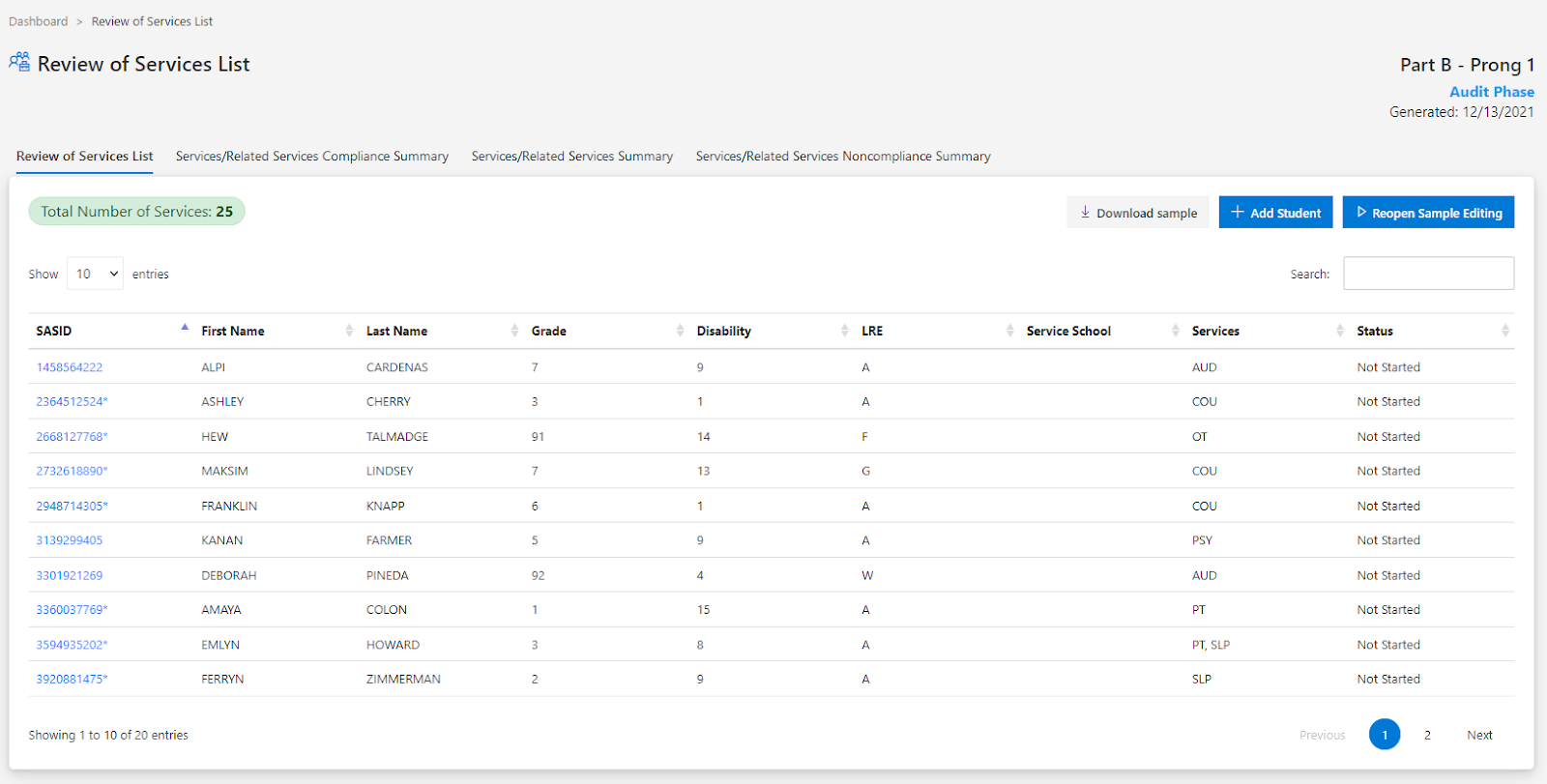
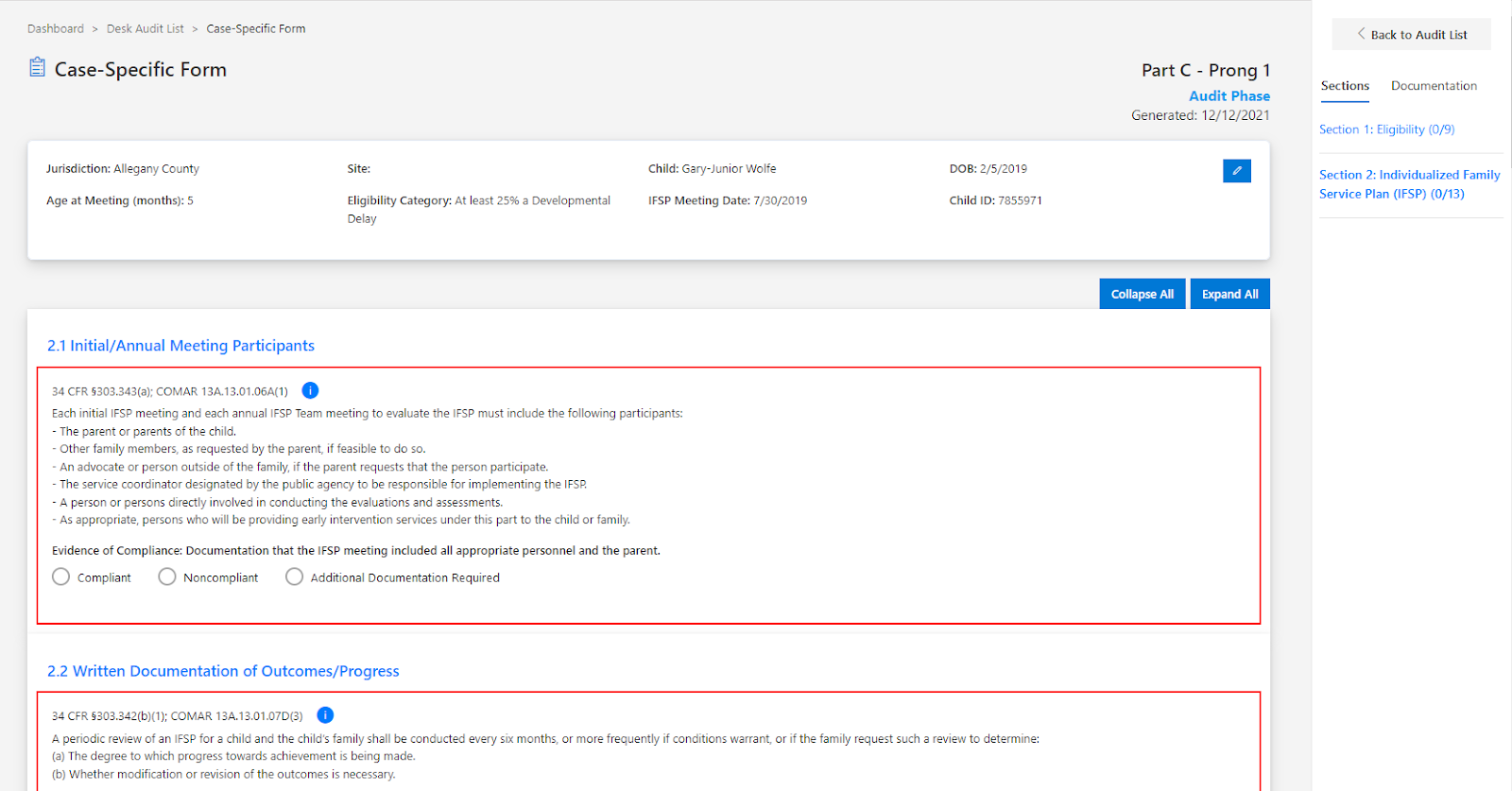
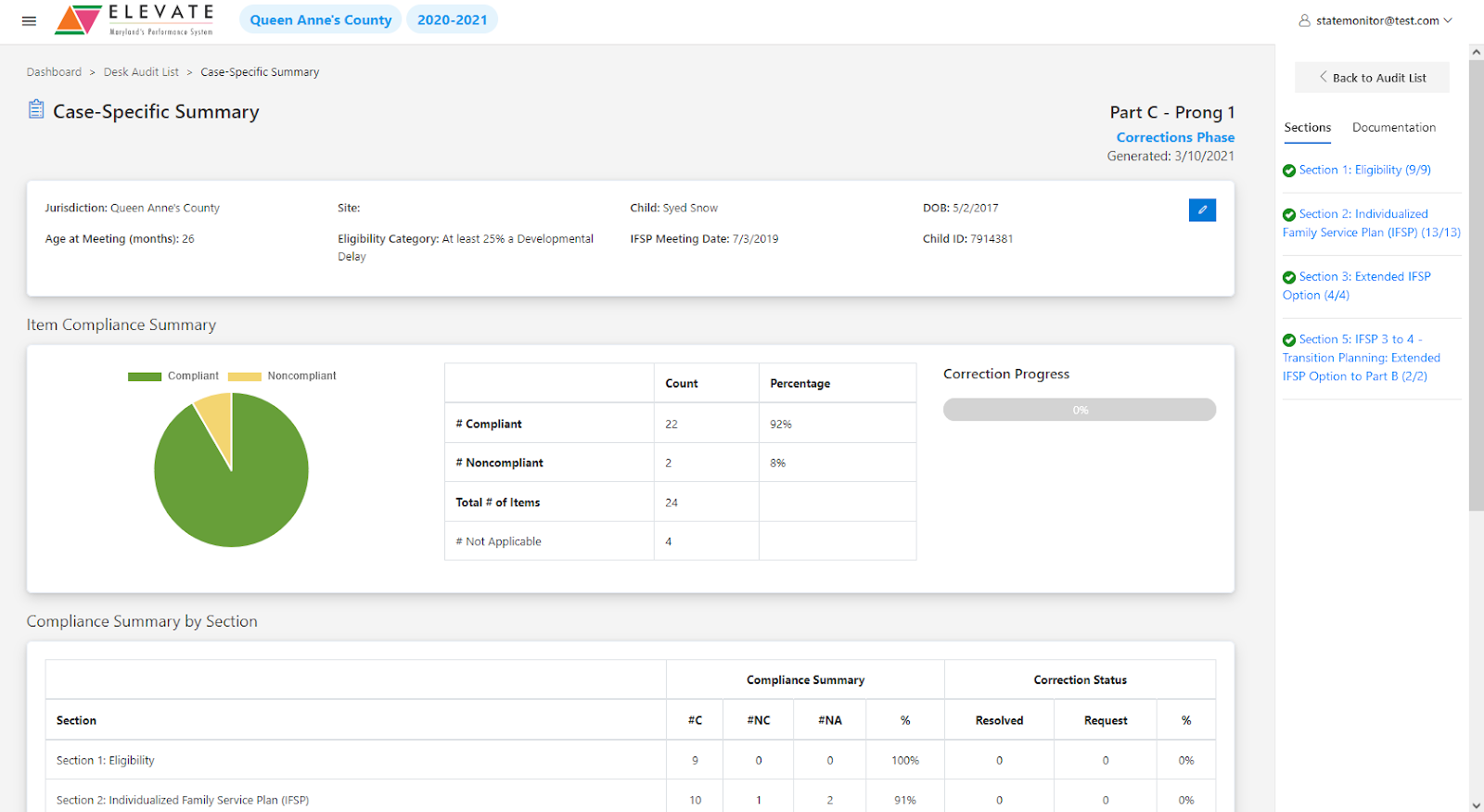
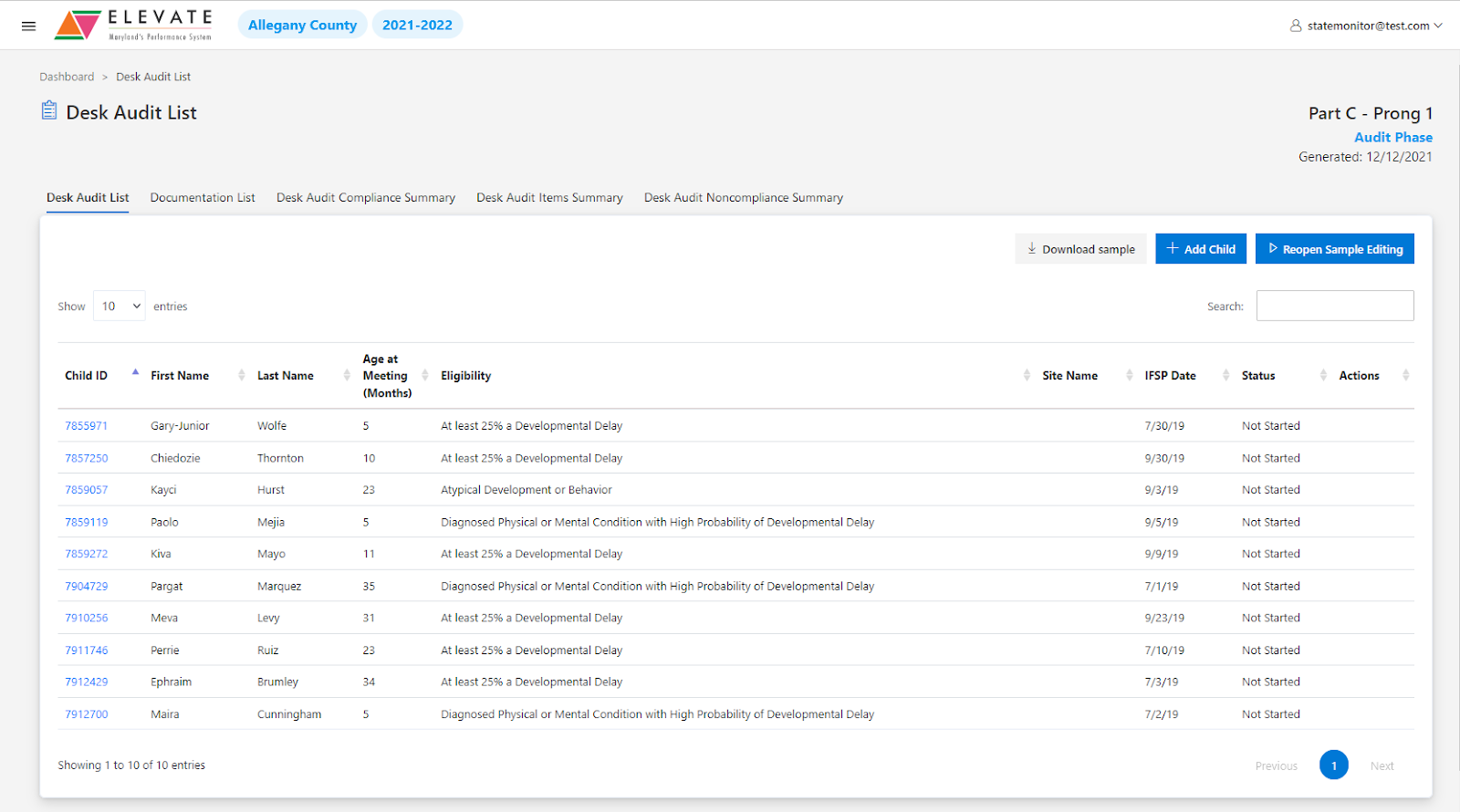
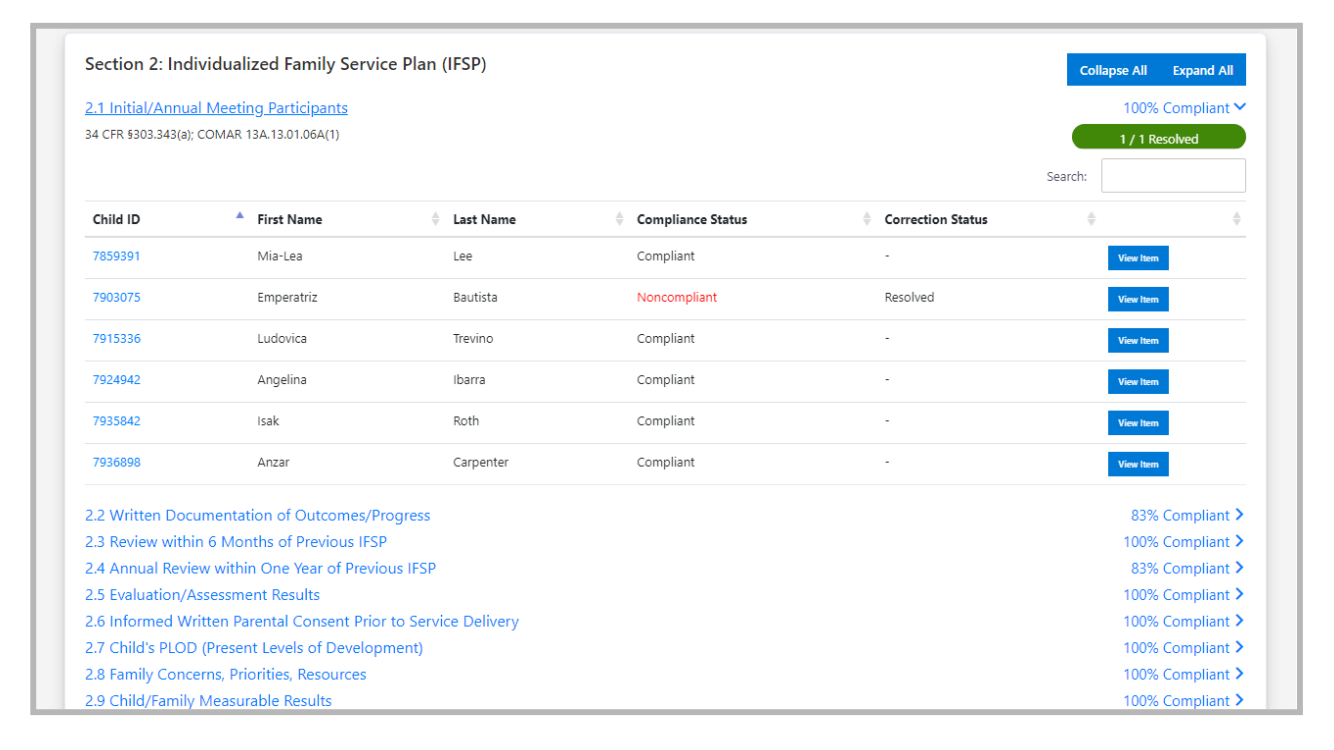
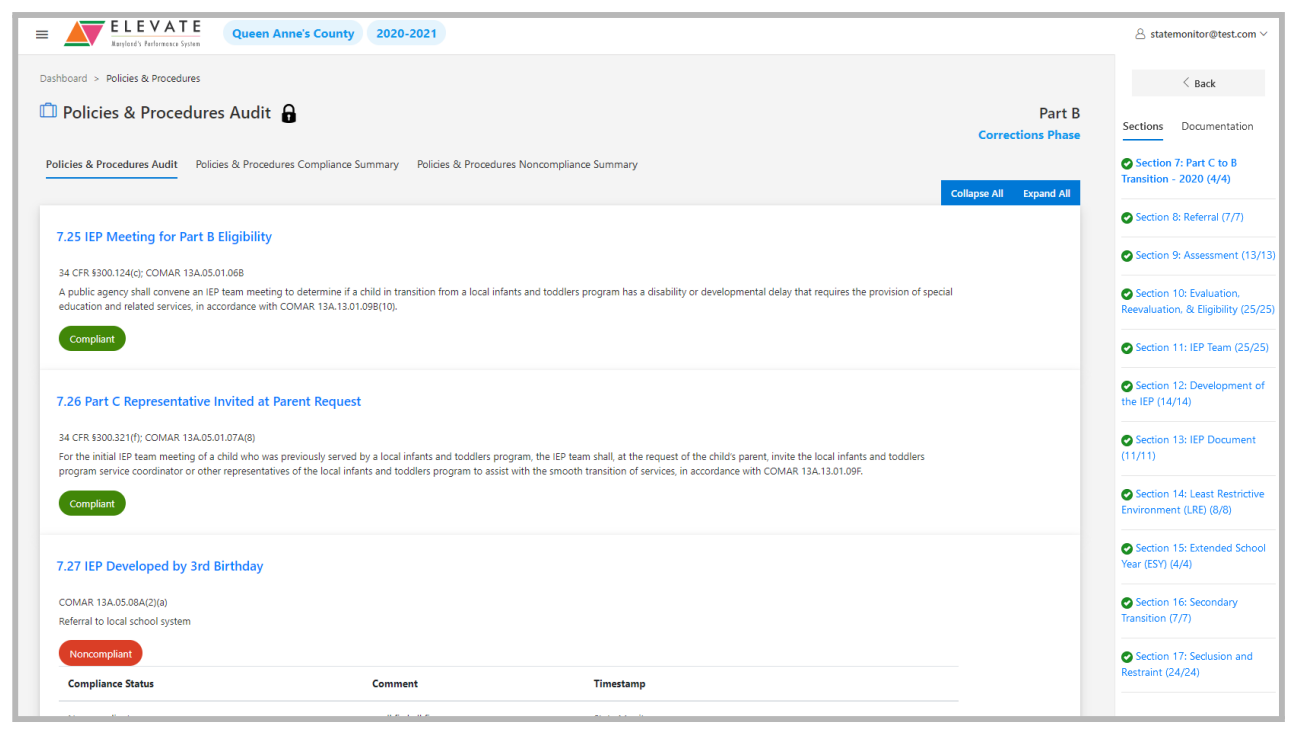
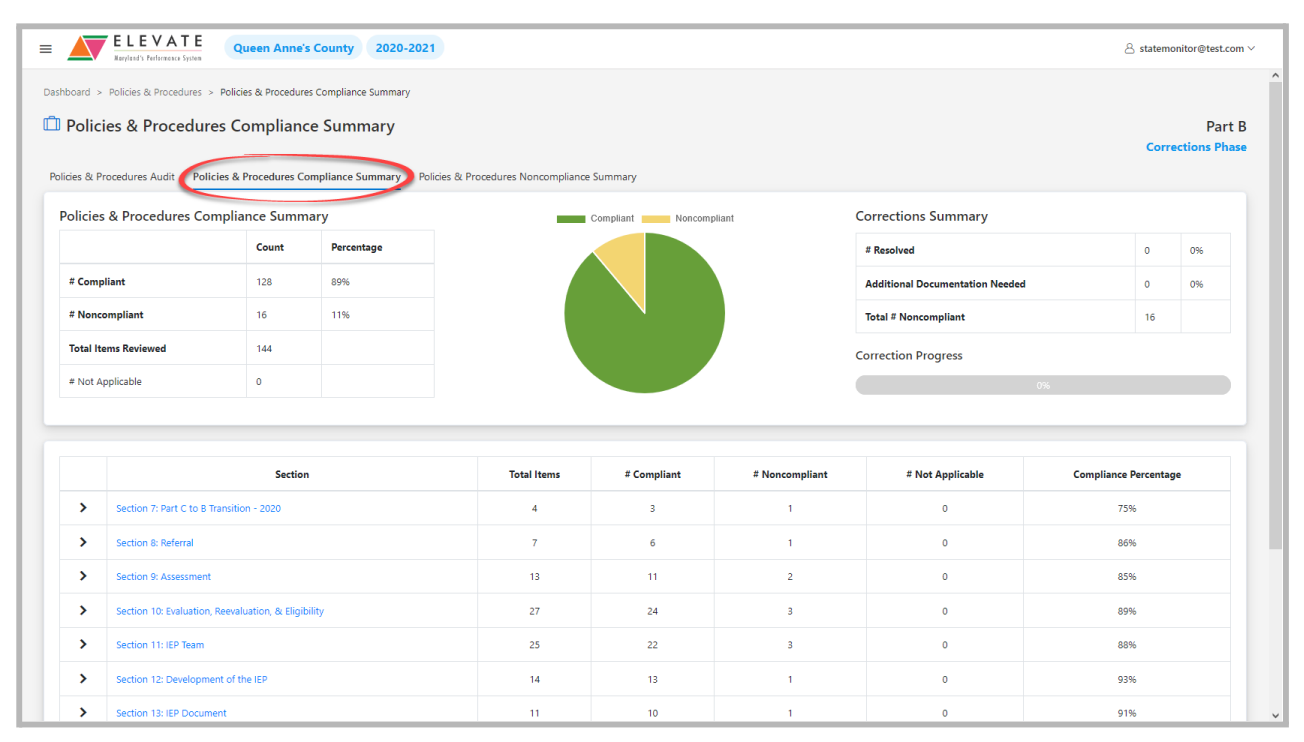
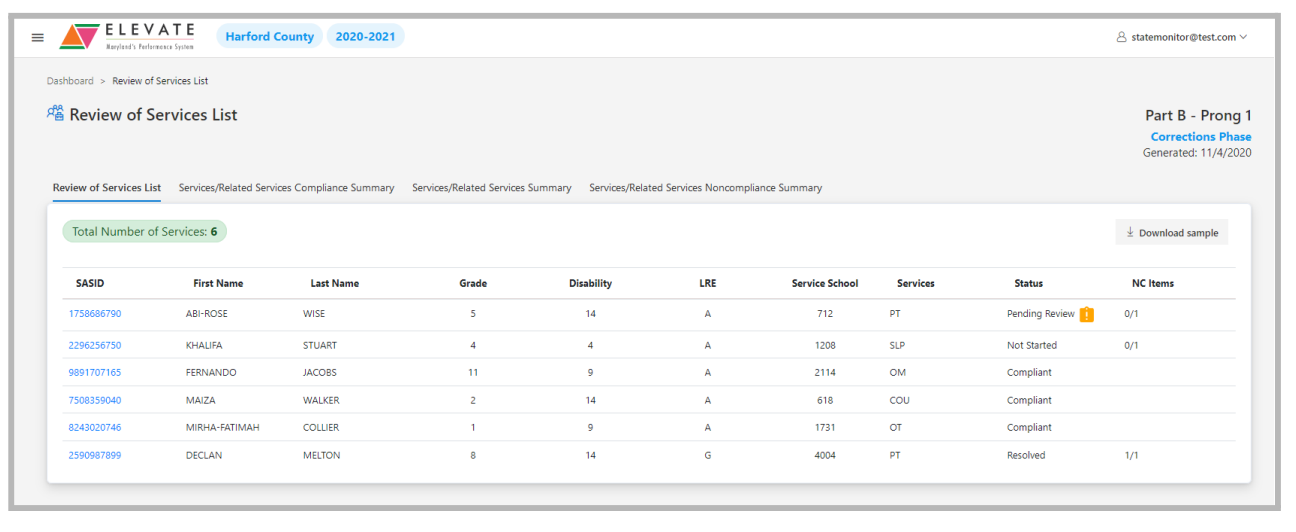
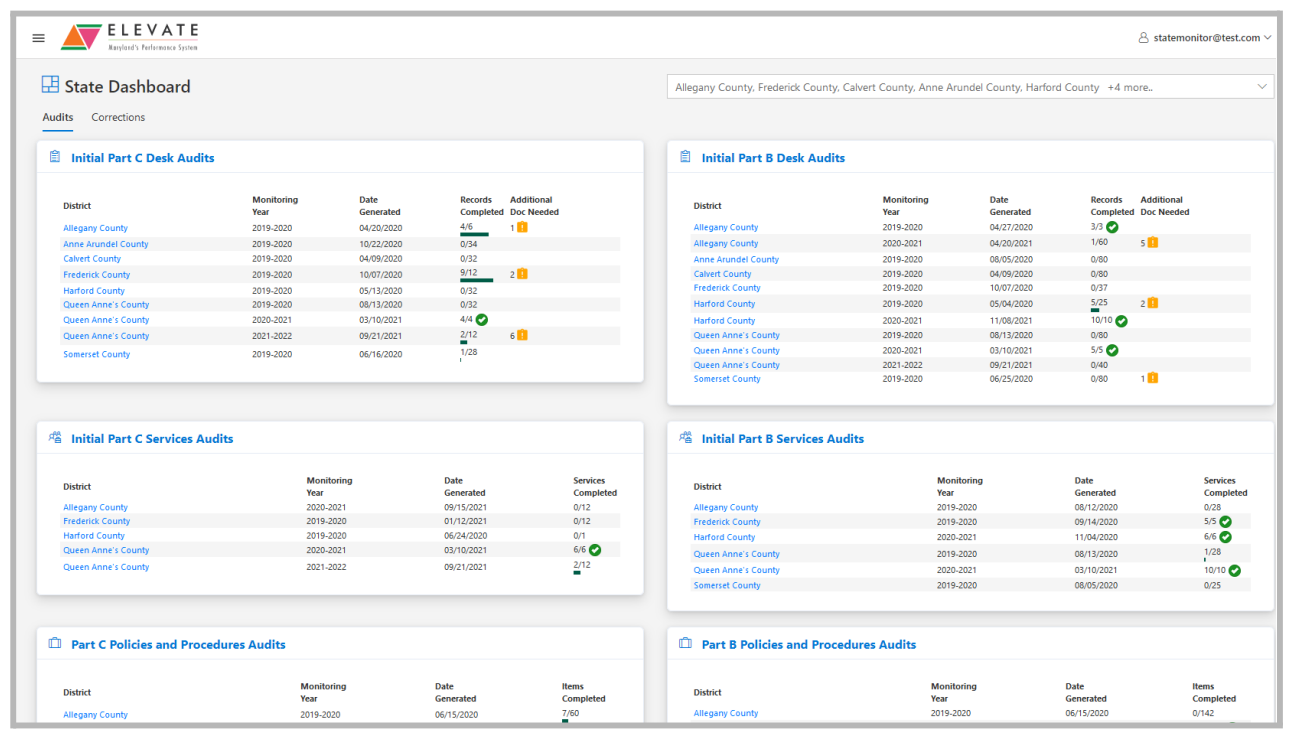
Elevate is the name of the web-based application developed for the (MSDE) to monitor compliance with IDEA. This powerful tool enables school districts to upload data about students receiving special education services. From this data, Elevate generates randomized samples that state monitoring staff use to verify compliance. Instances of non-compliance are tracked within the application to ensure timely correction.
The application supports bi-directional communication between state staff and local school districts, facilitating seamless collaboration. State staff can request additional documentation, which can be uploaded into the system, creating a comprehensive audit record for compliance-related actions.
Elevate also offers a robust reporting framework that includes standard pre-defined reports along with the ability to create custom reports. These reports can be presented in both tabular and graphical formats, providing school districts with multiple ways to analyze and understand their data. This reporting framework allows for the review of data in several ways including trend data across years and comparisons to state-wide data.
Additionally, Elevate enables the state to rank each school district across numerous indicators, applying various weightings in the process. This ranking helps the state focus its staff resources on the districts most in need and identify trends to guide statewide training initiatives.
The application is designed to be flexible, allowing state administrative staff to make changes to the monitoring process without requiring intervention from software developers. This adaptability ensures that Elevate can respond quickly to changes in both federal and state laws, maintaining its effectiveness as a compliance monitoring tool.
Technology Stack
Triskelle prides itself on our forward-leaning technology stack, as referenced in the Executive Summary document. Triskelle used this same architecture for this project.
Impact on Organizational Maturity
The successful delivery of this project significantly improved Maryland’s maturity in digital services and transformation. The key improvements included:
- Enhanced Digital Infrastructure: Migrated legacy systems to a cloud-based platform, enhancing data accessibility and security.
- MD Example: Elevate enhanced the security of the transfer and storage of PII by acting as a document repository. Previously, users had been transferring student records, SSIS lists, and other highly sensitive information through non-encrypted email.
- MD Example: We defined complex user permissions to ensure that users only had access to information directly related to their role (See Artifact MD-1).
- Process Optimization: Introduced automation tools to reduce manual work, increase efficiency, and minimize human error.
- MD Example: Elevate has streamlined many previously manual processes, reducing the workload and minimizing the potential for user error. These tasks, which were once time-consuming and prone to mistakes, are now automated, ensuring greater accuracy and efficiency. Notably, the process of creating random student datasets governed by a moderately complex algorithm was done by hand and is now a simple push button task.
- Operational Efficiency: Redesigned business processes to eliminate redundancies and improve workflow efficiency through digital solutions. Used digital dashboards to continuously monitor and improve performance.
- MD Example: Services/Related Services Audits had specific sample generation rules based on Maryland’s needs. For example, in a sample of 2,000 students, Elevate would generate a student set that contained at least six (6) students each in the following service categories: Speech Language Therapy, Occupational Therapy, Physical Therapy, and Special Instruction. This drastically reduced manual work from State Monitors who previously attempted to select sample sets based on reading hundreds of lines in a spreadsheet to find students who met these conditions and had received services during the monitoring period. Elevate also calculates how many Services are expected for each student, based on how many days per week services were prescribed over the Review period.
- MD Example: Daily digest notifications ensured that users were kept up to date on what work was waiting for their action.
- Improved Data Reliability and Reporting: Introduced advanced data validation and analytics tools to improve data accuracy and comprehensiveness..
- MD Example: Ensured accurate, tamper-proof reporting for federal data. Detected and corrected inaccuracies from previous manual tabulations when local performance data was integrated into Elevate.
- MD Example: Provided year-over-year performance metrics for better trend analysis at both the school district and state level.
- Scalability and Flexibility: Cloud-based solutions ensured that Maryland could easily scale operations and adapt to future needs.
- MD Example: The Elevate application was designed to give MSDE the flexibility to update state targets each year and easily edit data sources and calculations used for evaluating school district performance. This allows the state to quickly adapt to any federally mandated changes, such as new Indicator definitions or the addition of new Indicators, without needing to make underlying software changes.
- Increased Agility: The Agile methodology fostered a culture of continuous improvement, allowing the organization to quickly respond to changes and challenges. Our change management process as described in detail in our executive summary allowed us to plan for and manage changes, both large and small.
- MD Example: For the Elevate project with the Maryland Department of Education, Triskelle introduced agile concepts despite the client’s initial unfamiliarity with this methodology. Throughout the project, we guided the client through the principles and implementation steps of agile development. This collaborative approach allowed both parties to experience the benefits of agile firsthand. The iterative nature of agile development facilitated more responsive and adaptive application design and delivery. It also improved our ability to manage change and mitigate risks effectively. By the project’s conclusion, the client not only received a high-quality software solution but also gained valuable insights into agile practices, enhancing their capability to manage future projects with increased agility.
Project Gallery